
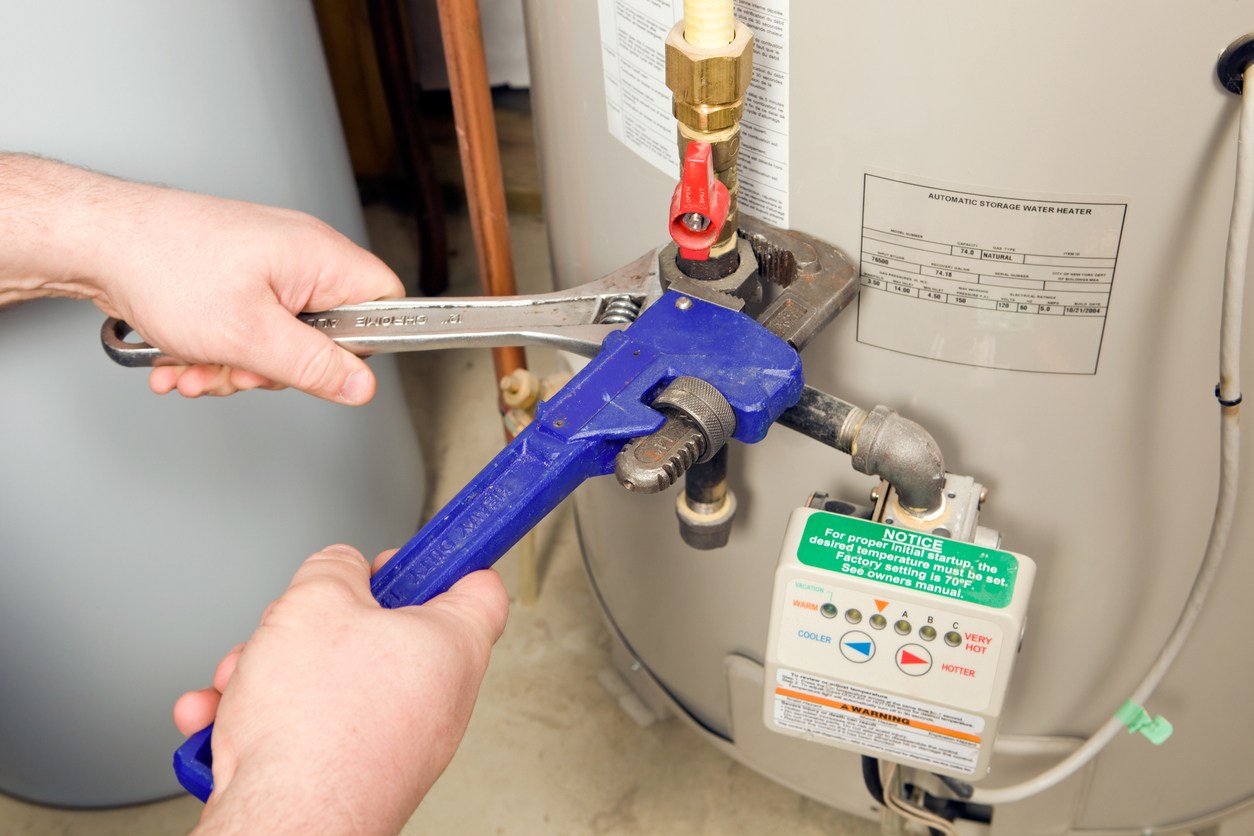
The best water heater maintenance tips for Virginia Beach homes come down to four habits: flush the tank once a year, check the anode rod every few years, test the pressure relief valve, and keep salt air and moisture away from the unit. Those steps slow the sediment buildup and corrosion that shorten a water heater’s life near the coast.
Coastal homes put extra wear on water heaters, so it helps to know where that wear comes from.
Why Coastal Living Wears Down Water Heaters
Many Virginia Beach water heaters sit in garages or utility closets where humid, salty air reaches them daily. Over time that air rusts fittings, gas vent connections, and the bottom edge of the tank jacket. Inside the tank, sediment settles at the bottom, insulating the water from the burner or element and making the heater work harder.
If you’ve noticed crusty showerheads or white spots on your faucets, you may be experiencing hard water in Hampton Roads. The good news is that steady upkeep handles most of it.
Flush the Tank Once a Year
Flushing does the most for a tank water heater, pulling out sediment before it hardens into scale. Here’s the basic process for most tank models:
- Shut off power or gas: Turn the breaker off for an electric unit, or set a gas unit to “pilot.”
- Close the cold water supply: The valve sits on the pipe feeding the top of the tank.
- Drain through a hose: Attach a garden hose to the drain valve, run it outside, and open a hot water faucet in the house so the tank can breathe.
- Run it until the water clears: Briefly reopen the cold supply to stir up stubborn sediment, then let it drain again.
- Refill before restoring heat: Close the drain, open the cold supply, and wait for water to flow steadily from the open faucet before turning power or gas back on.
Restoring heat to an empty tank can burn out an electric element, so that last step matters. If an old plastic drain valve won’t seal afterward, bring in a plumber.
Check the Anode Rod
Flushing clears out sediment, and the anode rod handles corrosion. This metal rod hangs inside the tank and corrodes on purpose, so the steel tank walls don’t. Once it’s eaten down to bare wire, the tank starts rusting from the inside.
Check the rod every few years, and sooner if your hot water smells like rotten eggs. Pulling it takes a large socket and some muscle, so many homeowners have a plumber swap it during routine service.
Test the Pressure Relief Valve
While you’re near the top of the tank, take a look at the temperature and pressure relief valve. It’s the safety valve with a lever and a pipe running toward the floor. Lift the lever briefly once a year with a bucket under the pipe, and you should hear water rush out and stop when you let go.
A valve that drips constantly, won’t open, or keeps running after you release it should be replaced. That valve is what keeps an overheated tank from building dangerous pressure.
Protect the Unit From Salt Air and Moisture
The outside of the heater needs attention too. Wipe down rust spots on fittings, keep pool chemicals and paint away from gas units, and clear debris from the drain pan. A drain pan with a line to a floor drain protects garage floors and finished rooms if the tank leaks.
Setting the thermostat around 120 degrees also helps, since it cuts mineral buildup and lowers scald risk. If you’re seeing rust-colored water, a rumbling tank, or puddles, it’s time for water heater repairs instead of more DIY upkeep.
What a Professional Tune-Up Covers
If you’d rather skip the hose and wrench, a plumber’s tune-up bundles all of this into one visit, typically including a full flush, an anode rod check, a relief valve test, a look at gas venting or electrical connections, and a check for leaks around fittings.
Tankless water heaters need different care. Instead of a sediment flush, they need a descaling flush through the heat exchanger and a cleaned inlet screen, usually once a year.
Keep Your Hot Water Running Longer
At Miller’s Heating and Air Conditioning, our plumbers offer tank water heater flushes along with repairs and replacements for tank and tankless models across Virginia Beach and Hampton Roads. We’ll clear the sediment, check the parts that wear out first, and tell you honestly how much life your unit has left. Book your water heater service and keep the hot water coming without surprise cold showers.