
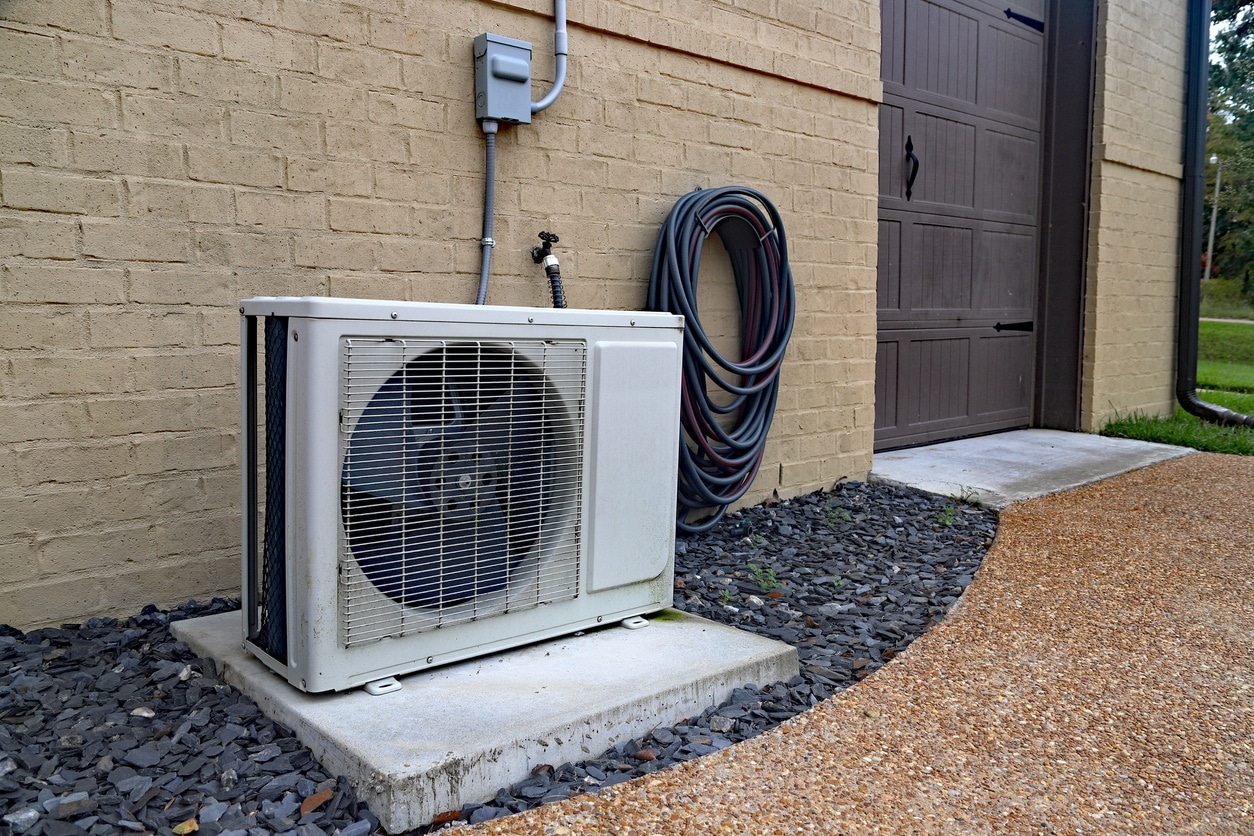
Choosing between a ductless mini split vs central AC in Hampton Roads mostly comes down to your ductwork. A home with ducts in good shape usually gets whole-house cooling for less upfront money with central air. An addition, a room over the garage, or an older house with no ducts at all is usually a better match for a ductless mini split.
The rest depends on how your house is built and which rooms you actually use.
How Each Option Moves Cool Air
Before comparing bills, it helps to know what’s physically different about the two setups.
Central AC
A central air conditioner pairs one outdoor condenser with one indoor air handler, then pushes cooled air through supply and return ducts to every room.
Ductless Mini-Splits
A ductless mini split skips the ducts, feeding one or more indoor heads through a small refrigerant line. Each head has its own controls, so every room becomes its own zone. If you don’t love the look of a wall unit, ceiling cassette and concealed models hide most of it.
Where Central AC Makes More Sense
Since central air depends on ducts, it shines in houses that already have them. Plenty of brick ranches and colonials around Chesapeake and Virginia Beach were built around forced air, so swapping an aging condenser and air handler is the simplest path.
Central air also handles filtration and moisture removal in one place, which matters with our humid summers. When the ductwork is sound, a properly sized AC installation cools every room evenly without new holes in your walls.
Sizing matters with either choice. A 2,000-square-foot house doesn’t automatically need a set tonnage, since insulation, windows, and sun exposure all change the load, so a load calculation should come before any quote.
Where a Ductless Mini Split Wins
Ductless equipment reaches spots central air can’t easily serve. Older homes in neighborhoods like Norfolk’s Ghent often have plaster walls and tight attics with no room for ducts, and adding them means tearing open ceilings. A mini split needs only a small opening for the line set.
Additions are the other big win. Sunrooms and bonus rooms often sit at the end of a long duct run or off it entirely, so they bake in July while the rest of the house feels fine. While heating and cooling a room over the garage can be a challenge, a single ductless AC head can fix it without overworking your main unit.
Comparing Energy Bills and Upfront Cost
Fixing one room at a time leads to the question most people ask next: which one costs less to run? Mini splits often use less electricity because they don’t lose cooled air through leaky attic ducts, and their inverter compressors adjust speed instead of cycling on and off. Central AC can narrow that gap when the ducts are sealed and insulated and the equipment carries a high SEER2 rating.
Upfront cost works differently. A mini split in one or two rooms is usually a smaller job than a central replacement, but a whole-home ductless setup with a head in every room can cost more than central air in a house that already has ducts. The number of heads, line length, electrical work, and efficiency rating all drive the price.
The Heat Pump Factor
Cooling is only half the story here, since we still get January cold snaps. Most ductless mini splits are heat pumps, so the same equipment warms the room in winter, a real plus for additions that never had a heat source.
Central setups can be heat pumps too, or pair an AC with a gas furnace. If you like your furnace, central air keeps it in place.
A Quick Way to Decide
If you’re still unsure, start with the room that made you think about this. Your answers to these usually settle it:
- Ducts in good shape: Central AC is usually the simpler, lower-cost replacement.
- No ducts or a hard-to-reach room: A ductless mini split avoids tearing into walls and ceilings.
- One floor hotter than the other: Central air for the main house plus a mini split for the problem room often works best.
- Rooms you rarely use: Zoned ductless heads let you shut those areas off.
Plenty of Hampton Roads homes end up with both, and the two run side by side without trouble.
Get Help Picking the Right Fit
At Miller’s Heating and Air Conditioning, we’ve been installing cooling equipment for Chesapeake, Virginia Beach, and nearby communities since 1978, including ductless mini splits for sunrooms, older homes, and upstairs bedrooms. We’ll look at your ductwork and the rooms giving you trouble, then walk you through the options that fit. Schedule an in-home visit and we’ll help you choose without guessing.