
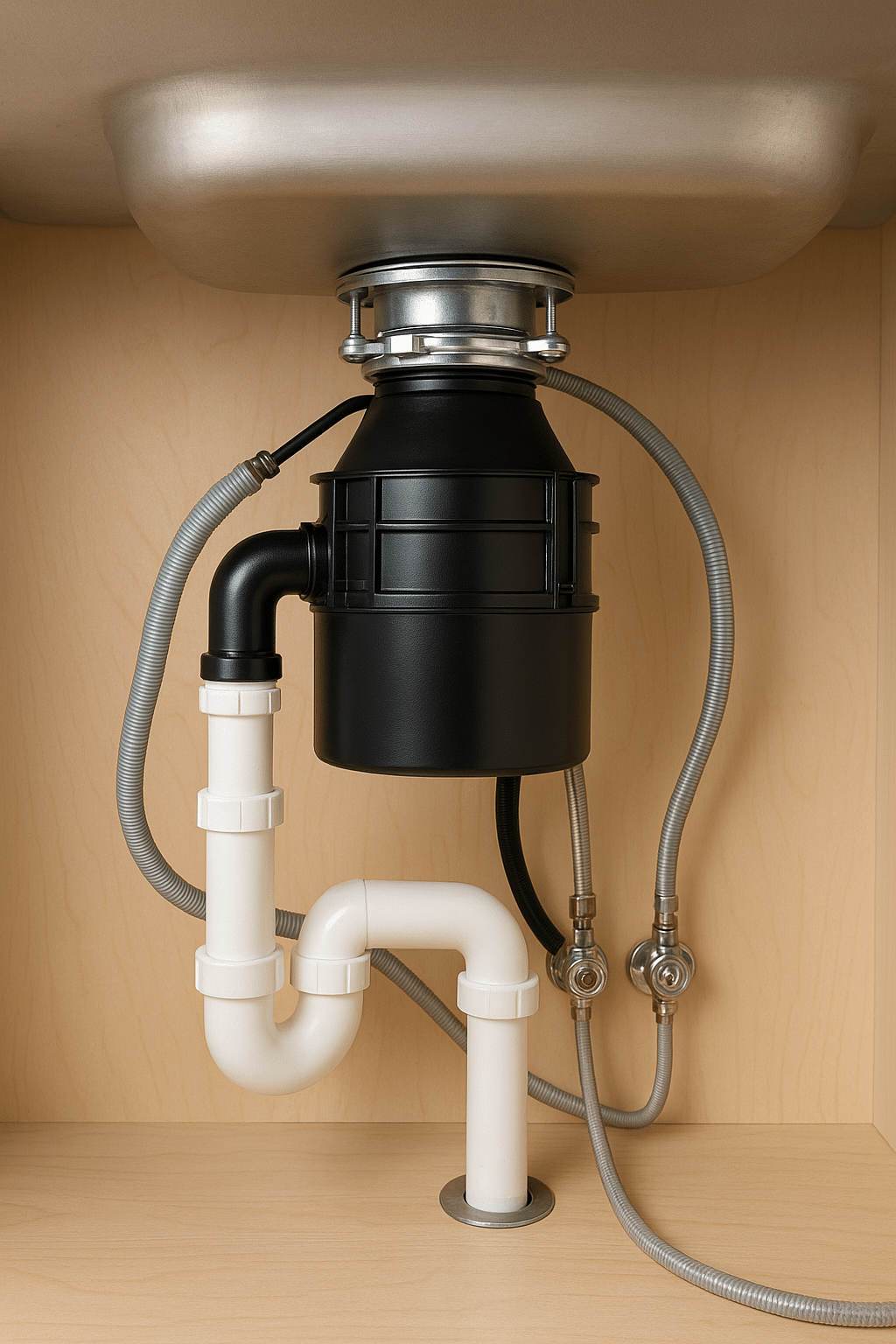
Garbage disposals are convenient kitchen tools, but they are not designed to handle everything. Misuse is one of the most common causes of clogs, odors, and plumbing damage. For Virginia homeowners, especially those in areas like rural Chesapeake where septic systems are common, understanding proper garbage disposal use is essential.
This guide covers what you should and should not put down your disposal, clears up common myths, and explains how disposal use differs between homes on city sewer and septic systems.
Garbage Disposal Dos
Here are some tips for keeping your garbage disposal running:
Do Run Cold Water
Always run cold water before, during, and after using your disposal. Cold water helps solidify grease and food particles so they can be chopped and flushed through the pipes more effectively. Let the water run for about 15 to 20 seconds after grinding stops to ensure waste moves fully through the system.
Do Cut Food Into Smaller Pieces
Although disposals are powerful, they work best when food scraps are fed gradually. Large quantities added all at once can overwhelm the unit and increase the risk of clogs.
Do Dispose of Soft Food Scraps
Small amounts of soft food like cooked vegetables, small meat scraps, and fruit pieces are generally safe for most disposals. Even so, moderation is key.
Do Clean It Properly
Instead of harsh chemicals, use mild dish soap and cold water to clean your disposal. If odor is present, grinding a small amount of baking soda followed by cold water can help neutralize smells safely.
Garbage Disposal Don’ts
To preserve your garbage disposal’s functionality, you should avoid:
Don’t Pour Grease or Oil Down the Drain
One of the most damaging habits is pouring grease or cooking oil into the disposal. Even if it goes down as a liquid, grease cools and solidifies inside pipes, creating stubborn blockages over time.
Don’t Put Fibrous Foods in the Disposal
Fibrous foods are particularly problematic and are common in many Virginia kitchens. Items such as celery, corn husks, onion skins, asparagus, and artichokes contain stringy fibers that can wrap around the disposal blades and motor. These materials do not break down easily and often cause jams.
Pumpkin pulp during fall, a popular seasonal food in Virginia, can also create thick, sticky buildup that coats pipes and slows drainage.
Don’t Grind Rice, Pasta, or Bread
Starchy foods like rice, pasta, and bread expand when exposed to water. Inside your plumbing, they can form thick clumps that contribute to clogs.
Don’t Use Ice as a Cleaning Tool
A common myth suggests that grinding ice sharpens disposal blades. In reality, garbage disposal blades are not sharpened like knives. They use blunt impellers to push food against a grinding ring. Ice does not sharpen anything and can stress older units unnecessarily.
Don’t Rely on Lemons to Clean It
Another popular tip is grinding lemon peels to freshen odors. While this may create a temporary citrus scent, the peels themselves can contribute to buildup and may not fully eliminate bacteria causing odors. Proper cleaning with soap and water is more effective.
Sewer vs. Septic: Why It Matters
Most urban and suburban Virginia homes connect to city sewer systems, which transport wastewater to municipal treatment facilities. In these homes, occasional garbage disposal use is generally manageable when used properly.
However, homes in rural areas, including parts of Chesapeake, often rely on septic systems. Septic systems break down waste using natural bacteria in a tank buried underground. Adding excessive food waste from a garbage disposal increases the amount of solid material entering the tank.
This can overwhelm the system, reduce bacterial efficiency, and lead to more frequent pumping. In some cases, it can even cause drain field issues.
For septic homeowners, garbage disposal use should be limited. Composting food scraps or disposing of them in the trash is often a better option. If you do use a disposal with a septic system, consider having your tank inspected and pumped regularly to prevent buildup.
Preventative Maintenance Tips
Proper use extends the life of your garbage disposal and protects your plumbing system. Here are a few preventative tips:
- Avoid overloading the unit
- Keep fibrous and starchy foods out of the disposal
- Run cold water during use
- Schedule professional drain cleaning if slow drainage develops
- Address unusual noises or jams promptly
If your disposal frequently clogs, makes grinding noises, or causes backups, professional plumbing service may be needed to prevent larger plumbing problems.
Keep Your Garbage Disposal in Top Shape
Garbage disposals are helpful kitchen tools, but they are not trash cans. Understanding what belongs in the unit and what does not can prevent costly plumbing repairs. For Virginia homeowners, especially those on septic systems in rural Chesapeake, mindful disposal use is even more important.By following simple dos and don’ts and avoiding common myths, you can keep your garbage disposal running smoothly and protect your plumbing system for years to come. And if you need a trusted plumber to service your garbage disposal, contact Miller’s Heating & Air Conditioning today.