
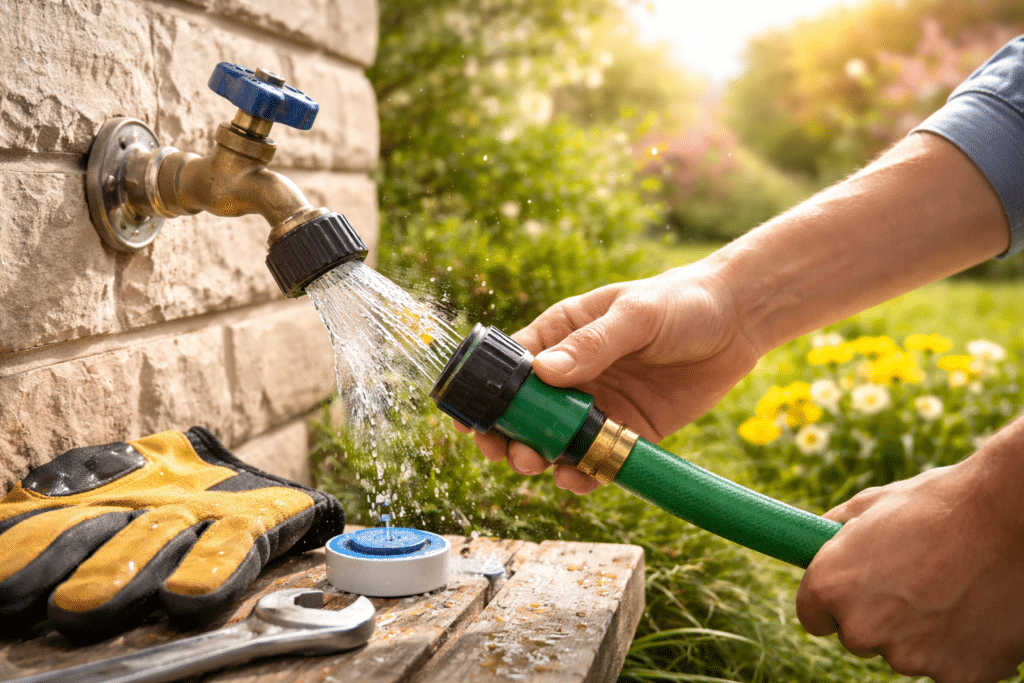
As temperatures warm up and winter fades away, it is time to turn your attention to your home’s exterior plumbing. Outdoor faucets, also known as hose bibs, are especially vulnerable to winter damage. If they were not properly prepared for freezing temperatures, hidden issues may have developed.
De-winterizing your outdoor faucets each spring is an important step in preventing leaks, water damage, and wasted water. This simple checklist will help you safely bring your exterior plumbing back into use and catch problems early.
1. Locate the Shut-Off Valve
If your home has a dedicated shut-off valve for outdoor faucets, it is typically located inside near where the pipe exits the wall. Before turning anything on, make sure the valve is still in the off position.
This gives you control as you inspect the faucet and helps prevent water from rushing through a potentially damaged line.
2. Inspect the Faucet and Connections
Go outside and take a close look at your faucet. Check for:
- Visible cracks or splits in the metal
- Loose connections or fittings
- Signs of rust or corrosion
- Damage to the hose threads
Even minor damage can lead to leaks once the water is turned back on.
If a hose was left connected over the winter, remove it and inspect both the hose and the faucet connection. Hoses can trap water inside the pipe, increasing the risk of freeze damage.
3. Turn the Water Back On Slowly
Return to the indoor shut-off valve and slowly turn it back on. Gradual pressure helps reduce stress on the pipes and allows you to monitor for issues.
As the water flows, listen for unusual sounds such as hissing or dripping behind the wall. These sounds may indicate a hidden leak.
4. Test the Faucet
Once the water is on, go outside and turn on the faucet. Let it run for a minute or two while observing its performance.
Watch for:
- Weak or inconsistent water pressure
- Water spraying from unexpected areas
- Leaks around the handle or spout
If everything appears normal, your faucet is likely in good condition. If you notice anything unusual, it is best to address it right away.
5. Check for Interior Leaks
After testing the faucet, go back inside and inspect the area where the pipe runs through your home. Look for:
- Moisture or water stains
- Dripping water
- Damp drywall or insulation
Leaks inside walls can go unnoticed for weeks, causing structural damage and mold growth. Catching them early is key.
6. Replace Worn Components
Over time, washers, seals, and fittings can wear out. If your faucet drips or feels loose, replacing these small components can improve performance and prevent water waste.
In some cases, upgrading to a frost-free outdoor faucet can provide better protection during future winters.
7. Add Preventative Measures for Next Winter
Spring is also a great time to prepare for the next cold season. Consider these preventative steps:
- Install insulated faucet covers
- Disconnect hoses before winter
- Shut off and drain outdoor water lines
- Upgrade older faucets to frost-free models
Planning ahead can help you avoid the same issues next year.
Why De-Winterizing Matters
During winter, water left inside outdoor faucets or pipes can freeze and expand. This expansion may cause cracks in pipes, valves, or the faucet itself. The tricky part is that these cracks are not always visible right away.
When you turn your water back on in the spring, damaged pipes can leak behind walls or inside your home. This can lead to costly repairs if not caught early. Taking a few minutes to inspect and test your outdoor faucets can help you avoid these issues.
When to Call a Professional
While many de-winterizing steps are simple, some problems require professional attention. If you notice low pressure, persistent leaks, or signs of pipe damage, it is best to call a licensed plumber.
Hidden pipe cracks or internal valve damage can worsen over time and lead to more serious issues if not repaired properly.
Spring Plumbing Made Simple
De-winterizing your outdoor faucets is a small but important part of your spring home maintenance routine. By inspecting your system, turning water back on carefully, and checking for leaks, you can prevent costly damage and ensure your plumbing is ready for warmer weather. Taking a proactive approach now helps protect your home, conserve water, and avoid unexpected repairs down the line.If you are unsure about the condition of your outdoor faucets or suspect hidden damage, Miller’s Heating and Air Conditioning is here to help. Our team provides professional plumbing inspections and repairs to ensure your home is ready for the season ahead. Contact us today to schedule your spring plumbing service and enjoy peace of mind all season long.